Deer Collision Avoidance: A Dawn, Dusk, and Braking Plan
A practical deer-collision plan for route timing, sight distance, firm straight-line braking, crash aftermath, and injured-animal safety.
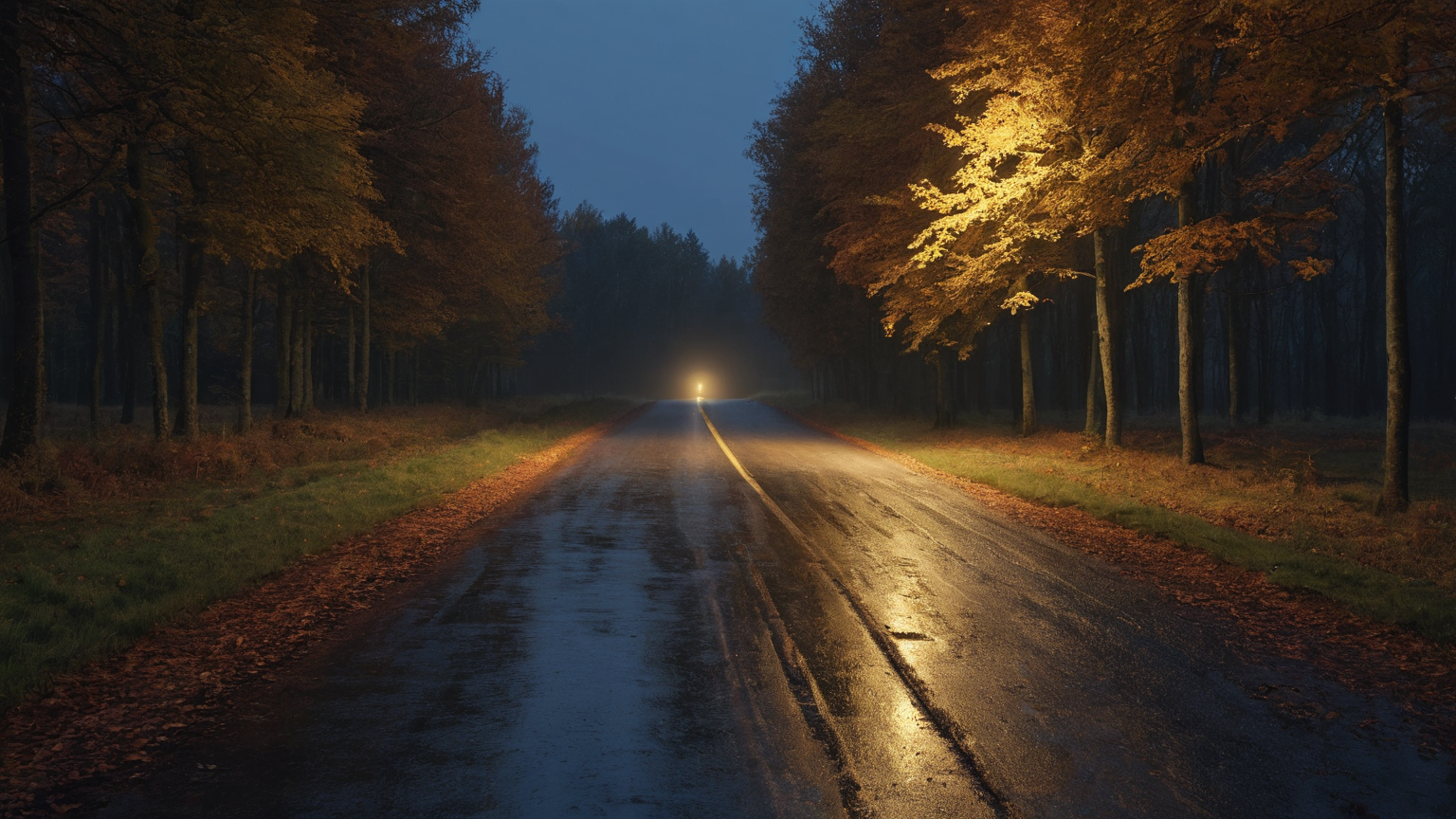
A deer at the shoulder can move from background scenery to your lane in a fraction of a trip. The useful response is not a last-second trick. It is a plan built earlier: choose a lower-risk time or route, create enough sight distance to stop, scan the places an animal can emerge, and know what your hands and feet should do if one appears.
The Federal Highway Administration’s national wildlife-vehicle study treats collisions with large wildlife as both a traveler-safety and wildlife problem. The study also shows why a deer warning sign should change driving behavior rather than merely confirm that deer live nearby. This guide turns that risk into decisions a driver can make before and during a rural or suburban trip.
The 20-second plan
If you remember only one sequence, use this one:
- Reduce speed before the high-risk segment. Come off the accelerator early; do not wait for eyeshine or movement.
- Scan wide and far. Search both shoulders, ditch lines, median edges, field entrances, tree lines, and the road beyond the car ahead.
- Make space. Increase following distance so another driver’s brake lights do not consume all of your available road.
- If a deer enters the lane, brake firmly. Keep both hands controlling the wheel and stay in your lane when possible.
- Do not swerve into oncoming traffic. A secondary collision, rollover, tree strike, or ditch departure can be worse than the animal impact you were trying to avoid.
- After impact, protect people first. Move out of traffic if the vehicle is controllable, call authorities, and keep away from the animal.
Michigan State Police’s deer crash safety guidance similarly emphasizes controlled braking and warns against swerving. “Stay in lane when possible” does not mean drive straight regardless of everything around you; it means do not make an unplanned, high-speed lane departure into a vehicle, pedestrian, fixed object, steep shoulder, or opposing lane.
Risk-time and route decision table
A clock alone cannot predict a crossing. Weather, season, local herds, traffic, crops, snow cover, roadside vegetation, and migration routes all matter. Use several cues together.
| Trip condition | Relative concern | Decision before entering the segment | Trigger to slow more or reroute |
|---|---|---|---|
| Full daylight, open divided road, broad cleared shoulders | Lower, not zero | Keep a full scan and normal safe following gap | Fresh carcass, active warning sign, deer visible beyond fence |
| Dawn or dusk on a wooded two-lane road | High | Leave extra time; reduce speed before shade and curves | Eyeshine, movement at tree line, one deer crossing |
| Night, rain or fog, narrow shoulders | High and compounded | Choose a better-lit or lower-speed route if practical | You cannot stop within the road you can clearly see |
| Fall movement period near fields or forest edges | Elevated locally | Check the route rather than assuming a familiar road is clear | Repeated sightings, seasonal signs, recent local crash reports |
| Traffic close behind with no safe passing area | High consequence | Add space ahead gradually; avoid abrupt speed changes | Tailgater plus limited sight distance: use a safe turnout when available |
| Interstate with median vegetation or fence ends | Variable but fast | Scan median and shoulders; keep escape space around the car | Animal on pavement: controlled firm braking, no reflex lane jump |
The New York State DMV driver manual identifies dawn and dusk as periods when drivers should be particularly alert for deer and notes that deer often travel in groups. Therefore, one deer reaching the opposite shoulder is not an “all clear.” Continue at reduced speed and look toward the direction it came from.
For wet or leaf-covered roads on the same commute, combine this article with the tire-tread and wet-braking checklist. If standing water or heavy rain is the limiting factor, use the hydroplaning recovery plan before treating deer detection as a separate problem.
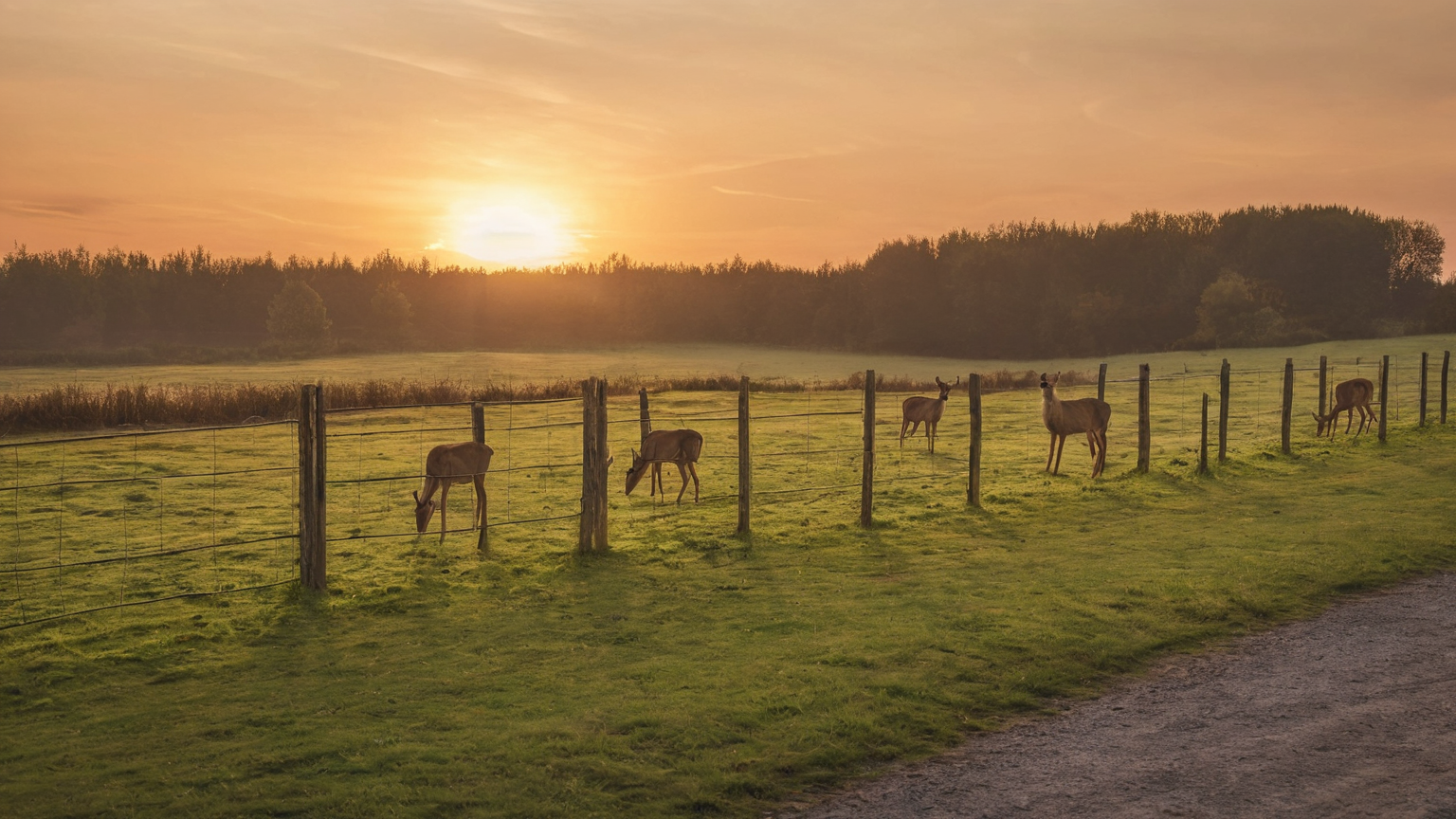
Build a “visible stopping zone”
The most practical speed question is not “What is the posted limit?” It is “Can I stop in the distance I can actually confirm is clear?” Headlights, curves, crests, rain, fog, glare, vegetation, and the vehicle ahead can make that distance much shorter than the road appears on a map. The California DMV’s safe-driving guidance explains the basic principle of adjusting speed to visibility and conditions, even when the posted limit is higher.
Here is a transparent hypothetical planning calculation, not a promise of real stopping performance. Assume a driver perceives the hazard and begins braking after 1.5 seconds. Assume level, dry pavement and a steady braking deceleration of 0.70 g after brake application. Use:
- reaction distance = speed in feet per second × 1.5 seconds
- braking distance = speed squared ÷ (2 × 0.70 × 32.2 feet per second squared)
- total planning distance = reaction distance + braking distance
| Assumed speed | Reaction distance at 1.5 s | Braking distance at 0.70 g | Hypothetical total |
|---|---|---|---|
| 35 mph (51.3 ft/s) | 77 ft | 58 ft | 135 ft |
| 45 mph (66.0 ft/s) | 99 ft | 97 ft | 196 ft |
| 55 mph (80.7 ft/s) | 121 ft | 144 ft | 265 ft |
These figures are calculations from stated assumptions, not guarantees, test results, legal stopping distances, or recommendations to drive at those speeds. A surprised or distracted driver may take longer than 1.5 seconds. Wet leaves, ice, loose gravel, worn tires, downhill grade, brake condition, vehicle load, and ABS behavior can lengthen the stop. The animal may also enter the lane after braking begins. The useful lesson is the shape of the math: reaction distance rises directly with speed, while idealized braking distance rises with the square of speed. A modest early speed reduction can preserve more space than a heroic late reaction.
Use the numbers only as a mental model. Never “spend” every foot of calculated distance. Keep a margin for uncertainty and drive slowly enough that the illuminated, visible path—not an optimistic formula—is the controlling limit.
Scan for movement, not just a whole deer
Searching only for a full animal standing in the lane is too late. Look for a horizontal back line above grass, legs below a guardrail, an ear silhouette, eyeshine, or vegetation moving against the wind. Shift your gaze between far road, near road, and shoulder zones instead of staring at a single bright point. Do not fixate on a deer at the right shoulder so completely that you drift left.
Treat clues cumulatively. A yellow deer sign marks a crossing-prone area; a carcass shows that animals have recently reached the roadway; fresh tracks or a deer already across indicate a live route. The FHWA report documents that warning systems and signs are intended to prompt a driver response, but a sign cannot physically prevent a crossing. Your speed and attention supply the missing response.
Use high beams where lawful and when they will not glare another road user, then dim them for approaching or closely followed traffic. Keep the windshield clean on both sides and verify headlamps are working and properly maintained. Brightness is not a substitute for speed control: more light may reveal the deer earlier, but only if the driver has left enough roadway to act.
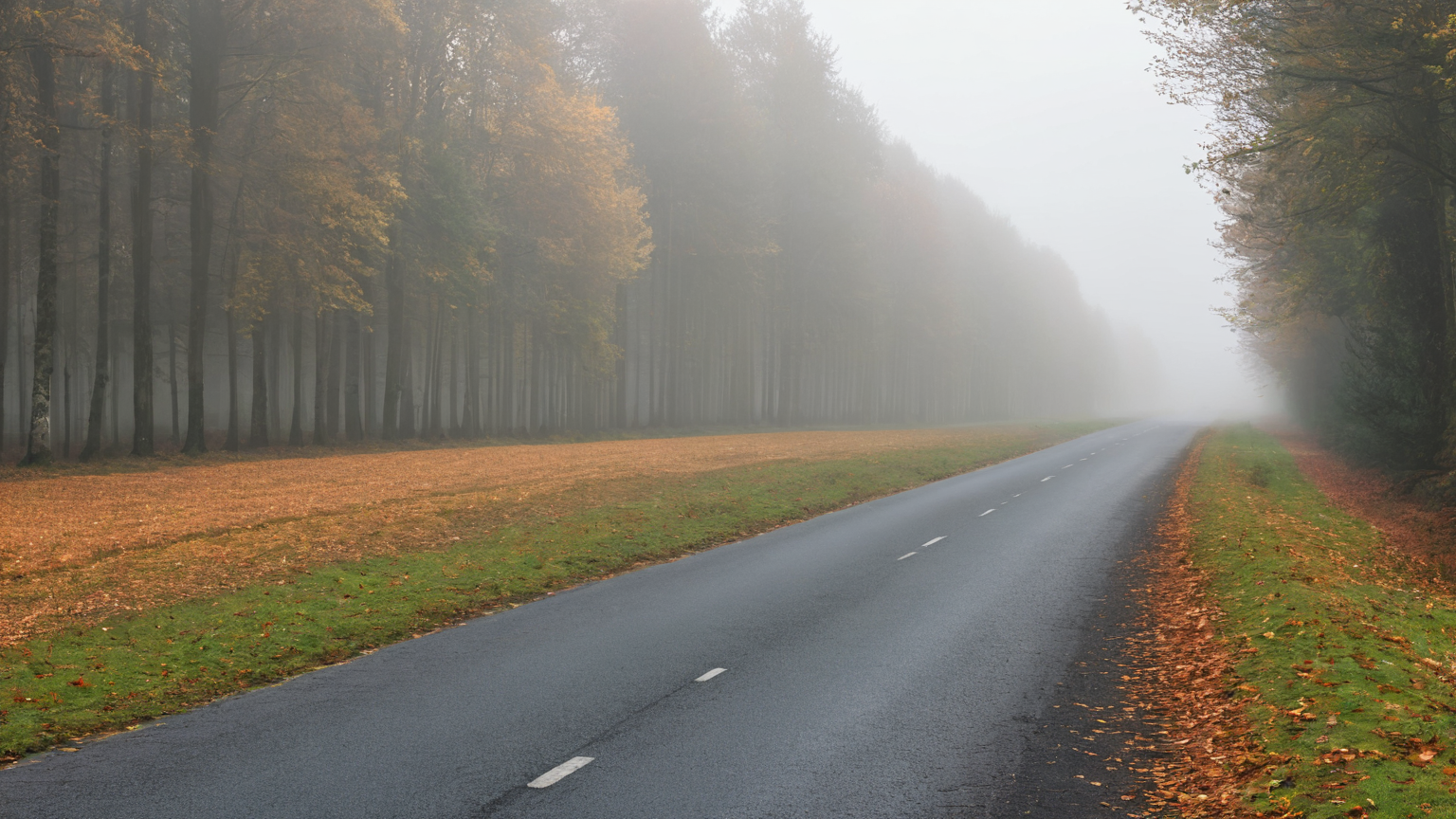
The safe response when a deer appears
First, release the accelerator and brake firmly. In a modern vehicle with anti-lock brakes, apply strong, continuous pedal pressure rather than pumping the brake. Keep the wheel aimed along the usable lane and look toward the safe path you want the car to follow. If stopping traffic is behind you, steady control matters more than trying to communicate with hand gestures or searching for the horn.
A horn may sometimes prompt movement, but it is not a dependable control: a deer may freeze, reverse, or run unpredictably. Do not accelerate to “beat” it across the lane. Do not assume the animal facing away will continue away. Be prepared for a second or third deer after the first.
If impact becomes unavoidable, continue controlled braking and keep the vehicle upright and in its lane when possible. Do not swerve into oncoming traffic. Do not choose a ditch, tree, bridge rail, cyclist, pedestrian, or adjacent vehicle as an escape route. The IIHS review of fatal animal collisions notes that many fatal events include more severe secondary impacts, such as another vehicle or a tree. That is the key reason controlled straight-line braking is safer guidance than an instinctive high-speed swerve.
Driver-assistance technology does not cancel this plan. NHTSA explains that driver-assistance technologies have defined capabilities and still require an engaged driver. Animal detection can vary by vehicle, software, speed, lighting, weather, animal size, and approach angle. Do not test automatic emergency braking with wildlife, and do not wait for a warning tone before using the brake.
Following another vehicle through deer country
A lead vehicle can hide both the deer and the road surface. Increase the gap before the wooded segment so you can see more shoulder and so its emergency stop does not become your collision. Avoid driving beside another vehicle for long periods; an open adjacent space reduces the chance that a small correction becomes a sideswipe.
Watch brake lights several vehicles ahead when sight lines allow. If one driver brakes near a field edge, do not assume they are turning without signaling. Ease off and search both sides. At the same time, check the mirror so your own braking is firm but not needlessly abrupt. A tailgater does not justify maintaining a speed that outruns your sight distance. Signal early, slow progressively, and use a safe turnout or passing opportunity rather than racing the risk zone.
After a collision: people, traffic, then the animal
Take a breath and keep steering. If the vehicle is controllable, move to a safe place fully outside the travel lane. Do not stop in a blind curve, on a narrow bridge, just over a crest, or where exiting places you beside fast traffic. Turn on hazard lights, check occupants for injury, and call 911 when anyone may be hurt, the vehicle is disabled in or near traffic, the animal creates a roadway hazard, or local law requires a police report. Follow dispatcher instructions.
Stay buckled inside if leaving the vehicle would expose you to traffic. If evacuation is necessary because of fire or another immediate danger, move occupants away from the roadway and behind a substantial barrier when possible. Never stand between damaged vehicles or directly downstream of approaching traffic. For preparation before a remote drive, the emergency roadside kit guide prioritizes visibility, phone power, warmth, and waiting safely rather than roadside improvisation.
Do not approach, touch, drag, feed, or attempt to load an injured deer. A frightened animal can kick, strike, or suddenly run into traffic. Washington’s wildlife agency advises the public to contact an appropriate rehabilitator or authority for injured wildlife, rather than handling it without training. The U.S. Fish and Wildlife Service likewise explains why keeping wildlife wild protects both animals and people. Tell dispatch the animal’s location, whether it is moving, and whether it blocks a lane; let police, road crews, conservation officers, or authorized wildlife professionals decide the response.
From a safe position, photograph vehicle damage, the road, signs, and the general scene. Record time, direction of travel, mile marker or coordinates, weather, witnesses, and the incident number. Do not step into the road to photograph the animal. Contact your insurer and arrange towing if there is leaking fluid, damaged lighting, a deployed airbag, tire or wheel contact, broken glass affecting visibility, a raised hood, or any doubt about steering, braking, cooling, or structural damage. A car that rolls is not necessarily safe to drive.
Rules for reports, salvage, possession of an animal, and contacting a game agency vary by jurisdiction. Do not remove antlers or the carcass unless the relevant authority explicitly says it is legal and safe.
Make the plan routine
Before a recurring dawn or dusk commute, identify the two or three segments with poor shoulders, dense tree lines, field entrances, creek bottoms, or frequent sightings. Decide in advance where you will reduce speed and where a legal turnout exists. Clean the windshield, check lamps and tires, secure loose cargo, and set navigation before moving. Keep extra alertness in known deer areas and assume that more than one animal may follow the first; this turns a familiar route into a specific, repeatable risk plan.
After any near miss, review the conditions instead of dismissing it as luck. Was speed too high for the visible road? Did a dirty windshield or following gap hide the animal? Was the route choice unnecessarily risky at that time? Change one part of the next trip—timing, route, speed, or gap—so the near miss becomes useful information.
FAQ
Should I swerve if a deer appears in my lane?
Brake firmly, keep control, and stay in your lane when possible. Do not swerve into oncoming traffic or toward a person, vehicle, ditch, tree, or barrier. If impact is unavoidable, continued controlled braking reduces speed while avoiding the secondary-impact risk created by an abrupt lane departure.
When should I expect deer?
Deer can enter roads at any time. Treat dawn and dusk, fall movement periods, wooded or field-edge roads, water crossings, warning-sign areas, carcass locations, and recent sightings as reasons for greater caution. Local wildlife and transportation agencies are more useful than a national calendar for a specific route.
Do deer whistles prevent collisions?
Do not base your safety margin on a whistle or other animal-warning accessory. The driver-controlled measures are earlier speed reduction, a longer sight-and-following gap, active shoulder scanning, maintained lights and glass, and firm controlled braking when needed.
Can I drive home after a minor deer strike?
Only if people are safe, local reporting duties are satisfied, and the car has no sign of damage affecting control or visibility. Leaks, warning lights, rubbing tires, broken lamps, steering change, overheating, airbag deployment, or damaged glass are reasons to stop and obtain professional help. When in doubt, tow.
Who handles an injured deer?
Call 911 or the local police, road authority, or wildlife agency as local practice requires. Give a precise location and describe the roadway hazard. Keep your distance and do not attempt treatment, transport, or euthanasia yourself.